
Investing used to feel like something reserved for people with fat paychecks and a broker on speed dial. That’s not the reality anymore. In 2026, apps let you start with the spare change from your coffee order, robo-advisors build diversified portfolios for a few dollars a month, and employer retirement plans quietly compound in the background whether you’re earning $35,000 or $350,000 a year.
The real barrier isn’t money. It’s knowing where to start, which accounts actually make sense for your situation, and how to avoid the common traps that keep people sitting on the sidelines. This guide walks through practical, budget-flexible ways to get your money working for you this year, no matter how much you have to start with.
Why 2026 Is a Good Time to Start, Regardless of Budget
There’s a persistent myth that you need thousands of dollars before investing “counts.” In practice, the accounts and platforms available today were built specifically to erase that excuse. Fractional shares mean you can own a slice of a $3,000 stock for $10. Zero-commission trading means you’re not losing a chunk of your investment to fees before you even begin. And automatic contributions mean you don’t have to remember to invest — your money moves before you have a chance to spend it.
The bigger cost isn’t a small starting balance. It’s time. A 25-year-old who invests $100 a month at a 7% average annual return will have significantly more by retirement than a 35-year-old who invests $200 a month, purely because of the extra decade of compounding. Starting small today beats waiting for a “better time” that rarely arrives on its own.
Step One: Get Your Financial Foundation Right First
Before putting a single dollar into the market, a few things are worth checking off.
Build a Starter Emergency Fund
Investments can lose value in the short term, and if you’re forced to sell during a downturn to cover a car repair or medical bill, you lock in that loss. Most financial planners suggest keeping three to six months of essential expenses in a high-yield savings account before investing aggressively. If that feels out of reach right now, even $500–$1,000 set aside as a starter cushion is enough to begin investing alongside your savings goal.
Tackle High-Interest Debt
Credit card debt sitting at 20%+ interest is a guaranteed loss that’s hard for any investment to outrun. If you’re carrying high-interest balances, paying those down often delivers a better “return” than the stock market would. That said, this isn’t always all-or-nothing — many people split extra cash between debt payoff and retirement contributions, especially if there’s an employer match on the table (more on that shortly).
Know Your Timeline and Risk Tolerance
Money you’ll need in the next one to three years — for a house down payment, a wedding, a move — generally shouldn’t be in the stock market, where short-term swings are common. Money you won’t touch for five, ten, or thirty years can absorb more risk in exchange for stronger long-term growth. Being honest about your timeline shapes almost every decision that follows.

Smart Investment Options for Small Budgets
If you’re starting with $20, $50, or $100 a month, these options are built for exactly that.
Employer-Sponsored Retirement Plans (401(k) or 403(b))
If your employer offers a 401(k) or 403(b) with a matching contribution, this is usually the single best place to start. A common match structure is 50% of what you contribute up to 6% of your salary — that’s an immediate 50% return before the market does anything at all. Even contributing just enough to capture the full match is often smarter than investing elsewhere first, simply because that match is essentially free money.
Roth IRAs for Tax-Free Growth
A Roth IRA lets you contribute after-tax dollars that then grow completely tax-free, and withdrawals in retirement aren’t taxed either. For 2026, contribution limits allow individuals to put in a set amount annually (check current IRS limits, since they adjust for inflation), but you don’t need to max it out to benefit. Contributing $50 a month into a Roth IRA invested in a low-cost index fund is a realistic, powerful starting point for younger workers or anyone expecting to be in a higher tax bracket later in life.
Micro-Investing and Round-Up Apps
Apps that round up your everyday purchases to the nearest dollar and invest the difference have made investing nearly invisible. Buy a $4.50 coffee, and 50 cents gets swept into a diversified portfolio. It won’t make anyone rich on its own, but it builds the habit — and habits are often the hardest part to establish.
Robo-Advisors
Robo-advisors use algorithms to build and automatically rebalance a diversified portfolio based on your goals and risk tolerance, typically for a low annual fee. They’re a strong option for people who want a “set it and forget it” approach without picking individual investments themselves.
Index Funds and ETFs: The Backbone of a Simple Strategy
For most everyday investors, the wisest, most repeated advice from financial experts remains the same: low-cost index funds and exchange-traded funds (ETFs) that track broad markets, like the S&P 500 or total U.S. stock market, tend to outperform actively managed funds over long periods, largely because their fees are so much lower.
Why Index Funds Work for Any Budget
An index fund pools money from thousands of investors to buy a small piece of hundreds or even thousands of companies at once. Instead of trying to guess which single stock will outperform, you own a slice of the whole market’s growth. This diversification reduces the risk of any one company’s bad quarter tanking your portfolio, and the low fees mean more of your money stays invested rather than going toward management costs.
ETFs vs. Mutual Funds
ETFs trade like stocks throughout the day and often have lower minimum investment requirements — sometimes just the price of one share, or even a fraction of one, thanks to fractional share investing. Mutual funds may require a minimum initial investment, sometimes a few hundred to a few thousand dollars, though many brokerages have lowered or eliminated these minimums in recent years. For someone starting small, ETFs are usually the more accessible entry point.

Health Savings Accounts: An Underrated Investing Tool
For anyone enrolled in a high-deductible health plan, a Health Savings Account (HSA) is one of the most overlooked investment vehicles available. Contributions are tax-deductible, growth is tax-free, and withdrawals for qualified medical expenses are also tax-free — a rare triple tax advantage. Many HSA providers let you invest the balance once it crosses a small threshold, rather than letting it sit in cash. Because unused funds roll over year to year and can be invested for decades, some people treat their HSA as a secondary retirement account, paying medical bills out of pocket now and letting the HSA balance grow untouched for later.
Real Estate Without Buying a House
Real estate has traditionally required a large down payment, but that’s no longer the only way in.
Real Estate Investment Trusts (REITs)
REITs are companies that own or finance income-producing real estate — apartment buildings, warehouses, shopping centers, data centers — and they’re required to distribute the majority of their taxable income to shareholders as dividends. You can buy shares of a publicly traded REIT through a regular brokerage account for the price of one share, giving you exposure to real estate income without the responsibilities of being a landlord.
Real Estate Crowdfunding Platforms
Several platforms allow investors to pool money into specific real estate projects with relatively low minimums, sometimes as little as $10 to $100. These investments can be less liquid than publicly traded REITs, meaning your money may be tied up for a set period, so it’s worth reading the fine print on withdrawal terms before committing funds you might need soon.
Automate Everything You Can
One of the most reliable ways to actually stick with investing is to remove yourself from the decision-making process as much as possible.
Set Up Automatic Contributions
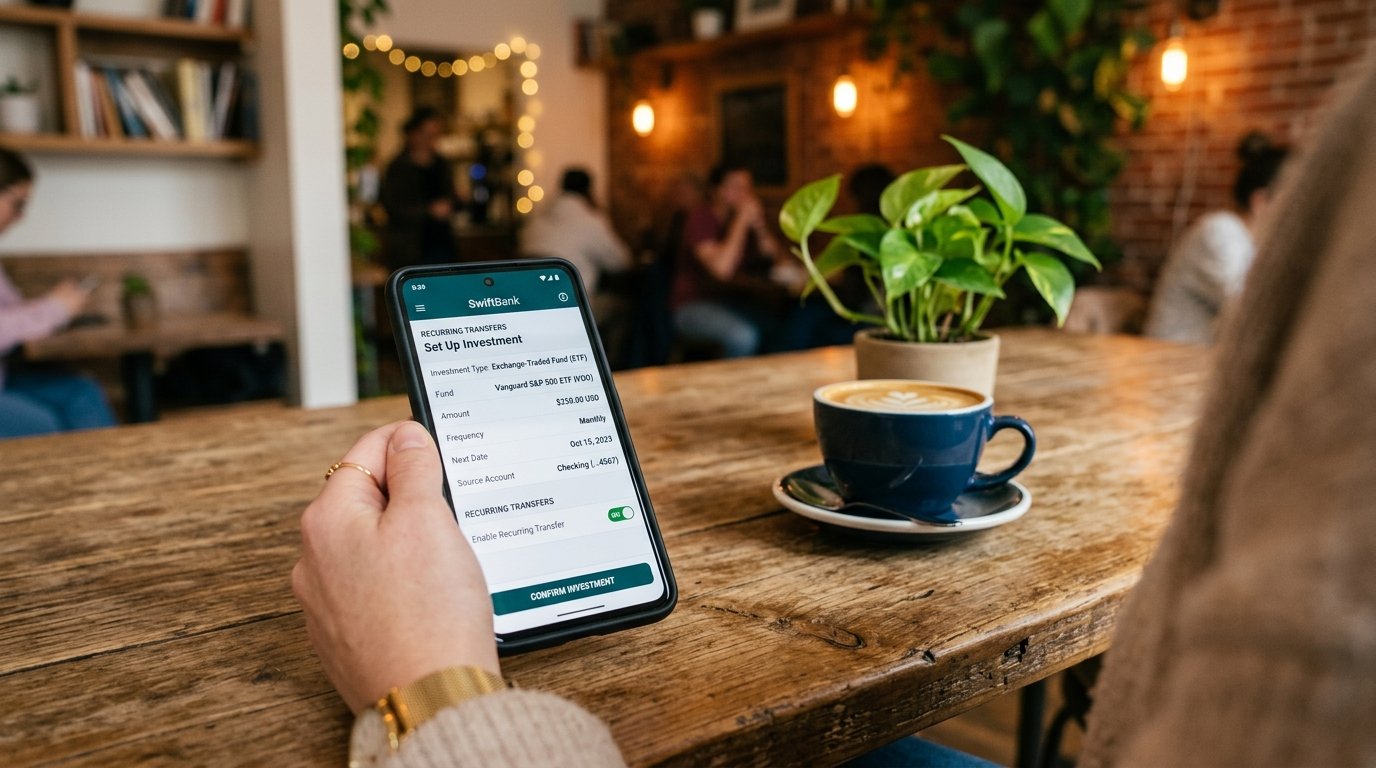
Whether it’s $25 or $500, scheduling automatic transfers from your checking account into your investment account on payday means the money moves before it has a chance to get spent elsewhere. This single habit is often more important than picking the “perfect” investment.
Use Dollar-Cost Averaging
Dollar-cost averaging means investing a fixed amount at regular intervals, regardless of whether the market is up or down. Some months you’ll buy at a high point, some months at a low point, and over time this smooths out the impact of market volatility. It also removes the pressure of trying to “time the market,” which even professional investors struggle to do consistently.
Reinvest Your Dividends
Many brokerages let you automatically reinvest dividends back into the fund or stock that paid them, buying additional fractional shares without any extra effort. Over decades, reinvested dividends can make up a significant portion of total investment returns.
Avoiding Common Beginner Mistakes
Chasing Trends Instead of Building a Plan
Meme stocks, hot cryptocurrencies, and viral “can’t miss” opportunities tend to attract beginner investors who fear missing out. These can be part of a portfolio if approached with money you can afford to lose entirely, but building a foundation of diversified, low-cost investments first tends to produce steadier long-term results.
Ignoring Fees
A 1% annual management fee might sound small, but compounded over 30 years, it can eat a substantial chunk of your total returns compared to a low-cost index fund charging a fraction of that. Always check the expense ratio before choosing a fund.
Trying to Time the Market
Even professional fund managers regularly fail to beat the market by trying to predict its short-term movements. For most people, consistent contributions over time outperform attempts to buy low and sell high based on guesswork.
Not Diversifying
Putting all your money into a single stock, even one you believe in strongly, exposes you to risk that a diversified fund would spread out. Diversification across sectors, company sizes, and sometimes countries helps cushion the impact if one part of the market underperforms.
Choosing the Right Account for Your Goals
Different accounts serve different purposes, and picking the right one matters as much as picking the right investments.
- Traditional or Roth 401(k)/403(b): Best for retirement savings, especially if there’s an employer match.
- Traditional or Roth IRA: Good for retirement savings outside of an employer plan, with more investment choice flexibility.
- Taxable brokerage account: Useful for goals outside retirement, like a future home purchase or general wealth building, since there’s no early withdrawal penalty.
- HSA: Ideal for those with high-deductible health plans who want a tax-advantaged way to cover medical costs now or invest for later.
- 529 plan: Designed specifically for education expenses, with tax advantages for qualified use.
Matching the account type to the goal — and its timeline — helps avoid penalties and makes the most of available tax benefits.
Building a Simple Portfolio Step by Step
For someone starting from scratch in 2026, a straightforward approach might look like this:
- Open a high-yield savings account and build a small emergency cushion.
- Contribute to a 401(k) or 403(b) up to at least the full employer match, if available.
- Open a Roth IRA (if income-eligible) and set up automatic monthly contributions.
- Choose one or two low-cost, broad-market index funds or ETFs as the core of the portfolio.
- Increase contribution amounts gradually as income grows, aiming for a target savings rate over time.
- Revisit the plan once or twice a year, adjusting for life changes rather than short-term market noise.
This kind of structure doesn’t require picking winning stocks or predicting the next big trend. It relies on consistency, low costs, and time — three things that are available to nearly every investor, regardless of starting budget.